





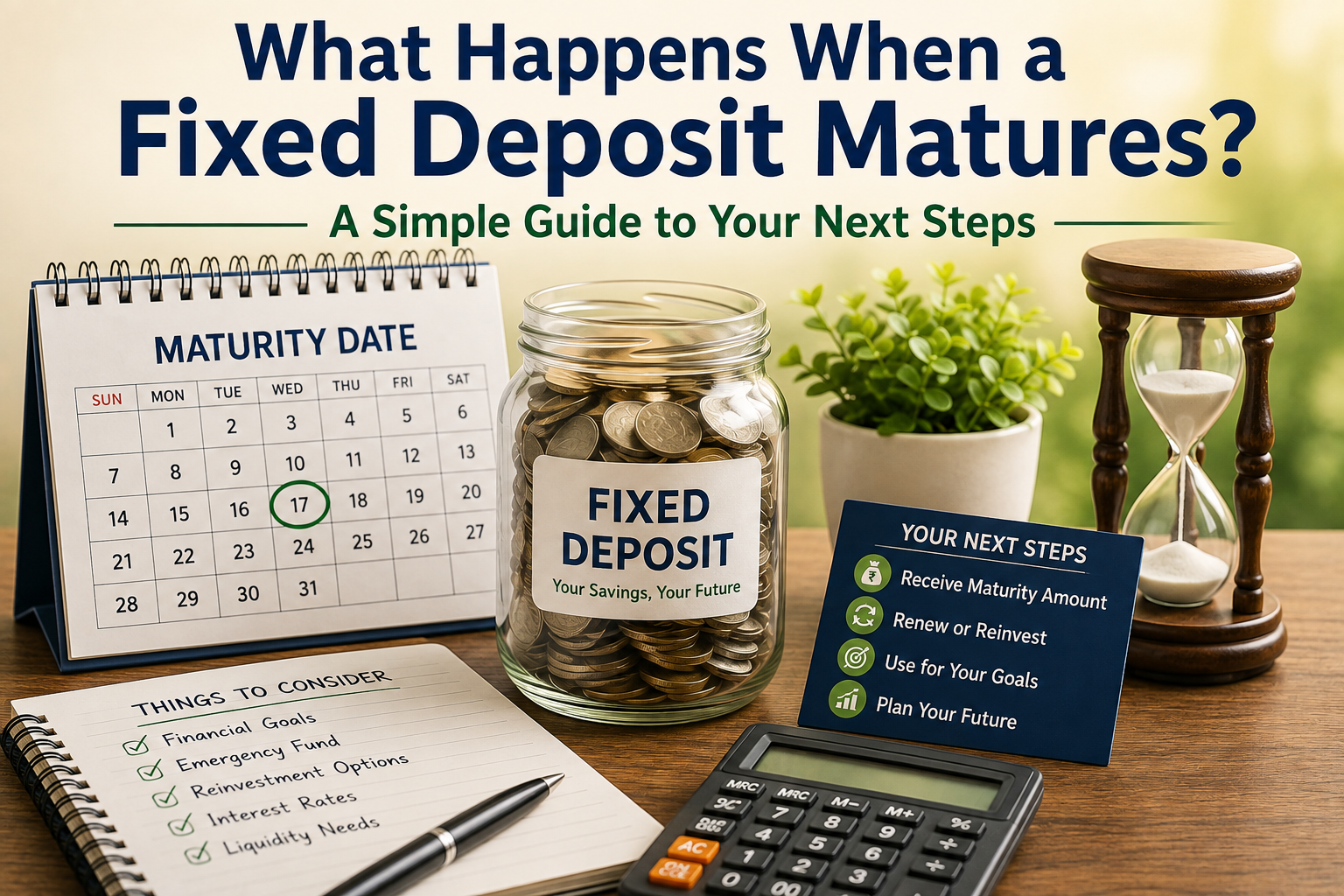
A Fixed Deposit (FD) is a popular way to save money for a specific period while earning returns at a predetermined interest rate. But what happens when the FD reaches the end of its tenure?
The maturity date marks an important point in your savings journey. At this stage, you receive the amount due according to the terms of your deposit, and you can decide what to do with the funds next.
Understanding the maturity process can help you make a more informed financial decision instead of simply leaving the money unused or renewing the deposit without reviewing your current needs.
What Does Fixed Deposit Maturity Mean?
FD maturity is the date on which the agreed investment period comes to an end.
When you open an FD, you select a tenure based on the available options and your financial objective. Once that tenure is completed, the deposit reaches maturity.
The maturity amount generally consists of the principal amount deposited along with the applicable interest, subject to the terms and conditions of the FD scheme.
For example, if you invest money for a fixed tenure and choose to receive the interest at maturity, the principal and accumulated interest are paid together when the deposit matures.
What Happens on the FD Maturity Date?
When your FD reaches maturity, the next step depends on the terms of the deposit and the option you have selected.
Generally, you may have options such as:
- Receiving the maturity proceeds
- Renewing the deposit
- Reinvesting the funds into a new FD
- Using the money for a planned financial requirement
The exact process, interest payout and renewal conditions can vary according to the applicable FD scheme.
How Is the Maturity Amount Determined?
The maturity amount depends on factors such as:
- Initial deposit amount
- Interest rate
- FD tenure
- Interest calculation method
- Interest payout option
- Applicable terms and conditions
If you choose an FD where interest is paid periodically, the amount received at maturity may differ from a deposit where interest is accumulated until maturity.
Therefore, it is important to understand the interest payout structure before choosing an FD.
What Can You Do After Your FD Matures?
Once your FD matures, you have several possibilities depending on your financial situation.
1. Use the Money for a Planned Goal
If you opened the FD with a specific purpose, the maturity amount can be used towards that goal.
It could help with planned expenses such as:
- Education
- Home-related expenses
- Business requirements
- Family commitments
- Major purchases
- Other planned financial needs
Having a defined purpose for your savings can make it easier to decide what to do when the FD matures.
2. Reinvest in Another Fixed Deposit
If you do not need the money immediately, you may consider reinvesting it into another FD.
Before doing so, review your current financial requirements, the available tenure, interest rate and payout options. Your circumstances may have changed since you originally opened the deposit.
Reinvesting should therefore be a considered decision rather than an automatic one.
3. Renew the Existing Deposit
Depending on the applicable terms, you may have the option to renew your deposit.
Renewal can be useful for people who want to continue their disciplined savings approach. However, it is worth reviewing the new applicable rate, tenure and terms before proceeding.
4. Keep a Portion for Short-Term Needs
You do not necessarily have to put the entire maturity amount into another investment.
If you have upcoming expenses or need greater liquidity, you may choose to retain some of the funds for short-term requirements and consider reinvesting the balance.
This can provide a practical balance between accessibility and continued savings.
Should You Automatically Renew Your FD?
Automatic renewal may seem convenient, but it is still important to review your financial situation before continuing with another FD.
Ask yourself:
- Do I still need the same tenure?
- Do I need access to the money soon?
- Has my financial goal changed?
- Do I prefer periodic interest income?
- Would reinvesting the full amount suit my current requirements?
- Do the current FD terms meet my expectations?
A maturity date provides an opportunity to reassess your savings strategy.
What If You Need the Money at Maturity?
If the maturity amount is intended for an upcoming expense, it can be useful to plan ahead.
Review the maturity date and expected proceeds in advance so that you can organise the funds according to your requirement.
For example, if the money is intended for education, a major purchase or another planned expense, knowing the maturity date can help you coordinate your finances without making last-minute decisions.
What If You Don't Need the Money Immediately?
If you have no immediate requirement for the maturity amount, you can consider continuing your savings through another suitable deposit.
You may also review whether splitting the amount between different financial goals would be more appropriate.
The important point is to make the decision based on your current financial objectives rather than simply following the same strategy used for the previous FD.
Important Things to Check Before Reinvesting
Before renewing or opening another FD, consider checking:
Interest rate: Compare the applicable rate for the new deposit.
Tenure: Select a period that matches your financial plans.
Interest payout: Decide whether periodic payouts or maturity-based returns are more suitable.
Liquidity requirements: Make sure you have sufficient funds available for foreseeable expenses.
Terms and conditions: Review the applicable rules, charges and other conditions before proceeding.
Make Your FD Maturity Work Towards Your Next Goal
FD maturity is not the end of your savings plan. It can be the starting point for your next financial objective.
Whether you use the maturity amount for an upcoming expense, retain it for liquidity or reinvest it into another deposit, the right choice depends on your financial needs and goals.
Pride Credit Society offers Fixed Deposit options with different tenure and interest payout choices, subject to the applicable scheme terms and conditions. Members can explore the available options and choose a deposit structure that aligns with their financial requirements.
Final Thoughts
Knowing what happens when a Fixed Deposit matures helps you avoid making rushed financial decisions.
As the maturity date approaches, review your goals, assess your liquidity needs and decide whether you want to use, retain or reinvest the maturity proceeds.
A well-planned maturity strategy can help you make better use of your savings and keep your financial plans moving forward with greater confidence.
Explore Fixed Deposit options with Pride Credit Society and plan your next financial step with clarity.

